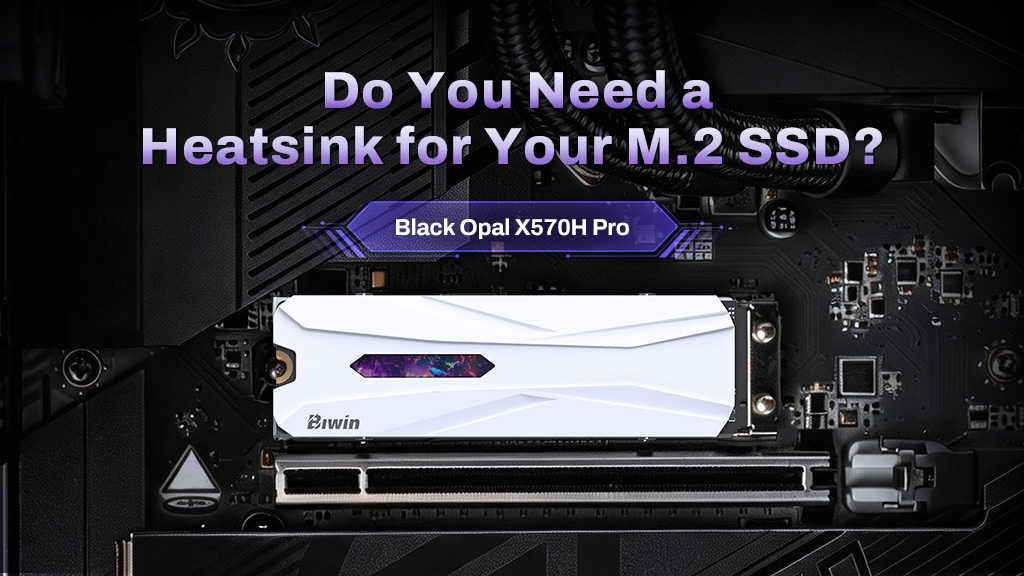

If your NVMe SSD is running hotter than it should, you might be facing poor performance, and even system instability and shutdowns. Modern SSDs are faster than ever, and though they’re designed to mitigate heat build-up as much as possible, if they don’t have access to adequate air flow, they can still overheat. If you’re running into this problem, here are a few ways to fix it.
If your SSD is underperforming, it might be overheating. Although modern SSDs use smart controllers to operate as efficiently as possible while delivering cutting-edge performance, there is only so much it can do if the local environment is too tight or too hot for it to dissipate its own heat effectively. That can lead to thermal throttling, system instability, and even crashes and shutdowns.
If you’re facing the kind of problems associated with an overheating NVMe SSD, here are some of the best ways to fix it.
How to monitor your SSD’s temperature
Before you try to implement a fix for an overheating SSD, it’s important to first check that it is actually overheating. The best way to do that is by using SSD monitoring software. If you’re running a Biwin SSD, like the Black Opal X570, then you can use Biwin Intelligence software to track your SSD’s operating temperatures.
Other third-party applications like CrystalDiskInfo can also help you check a drive’s operating temperature.
In each case, if your SSD is not overheating when it’s idling, consider running an SSD benchmark or performing a large file transfer to confirm whether it overheats when under heavy load, or when it’s used for extensive periods of time.
Give it more room
The main reason that SSDs overheat is because they don’t have enough room. Even an SSD with a huge heatsink isn’t going to stay cool if it’s crammed into a tight corner with no airflow and other hot components around it.
If your SSD is sat under a hot graphics card or other component, try moving it to one of the system’s other NVMe slots if you have one spare. If it’s surrounded by dust and debris or messy cables, consider cleaning out and tidying that part of your system to improve air flow.
Add a heatsink
Most high-end SSDs come with a heatsink, but if yours doesn’t, or you find that the heatsink it has is inadequate, you can add one (or a larger one) to boost the cooling potential. Heatsinks draw heat away from the SSD’s memory chips and controller faster than the air can alone, and they increase the surface area to make cooling it easier and more effective.
There are first party heatsinks available for many mainstream SSDs. There are also third-party alternatives which work with most standard 2230 and 2280-form factor SSDs. Just be sure to double check the dimensions of the SSD with the heatsink installed, as that can create clearance issues in some chassis depending on the NVMe slot location.
If you’re unsure whether your SSD actually needs additional cooling, check out our guide on whether you need a heatsink for your M.2 SSD to understand when a heatsink can help improve thermal performance.
Improve active cooling
Whether your SSD has a heatsink or not, the key to keeping it cool is getting enough airflow to it. Making sure direct air is blowing across your heatsink at all times will all but guarantee it won’t ever overheat. If your SSD is situated in a part of your PC that doesn’t get a lot of airflow, you can increase the size or speed of the fans you have, or you can add an additional fan that blows air specifically on to your SSD. If you need to, get creative with cable ties.
Keeping cool for best performance
As modern SSDs become ever faster, active and passive cooling solutions are becoming ever more important to maintain peak performance and proper device longevity. We aren’t at the level where we need AIO watercoolers for SSDs yet, but using monitoring software like Biwin Intelligence, using dense fin heatsinks, and ensuring proper airflow over your SSD will make sure that it performs well for many years to come.
Verify Your Cooling Improvements with Biwin Intelligence
Once you’ve improved your SSD’s cooling, it’s worth checking whether the changes actually made a difference. Biwin Intelligence lets you monitor SSD temperatures alongside drive health, S.M.A.R.T. information, and performance, making it easy to compare readings before and after installing a heatsink or improving airflow. It can also help you spot abnormal temperature spikes during benchmarks or large file transfers, giving you a clearer picture of how your drive behaves under load. It’s a simple way to confirm that your cooling adjustments are delivering the performance and stability you’re aiming for.