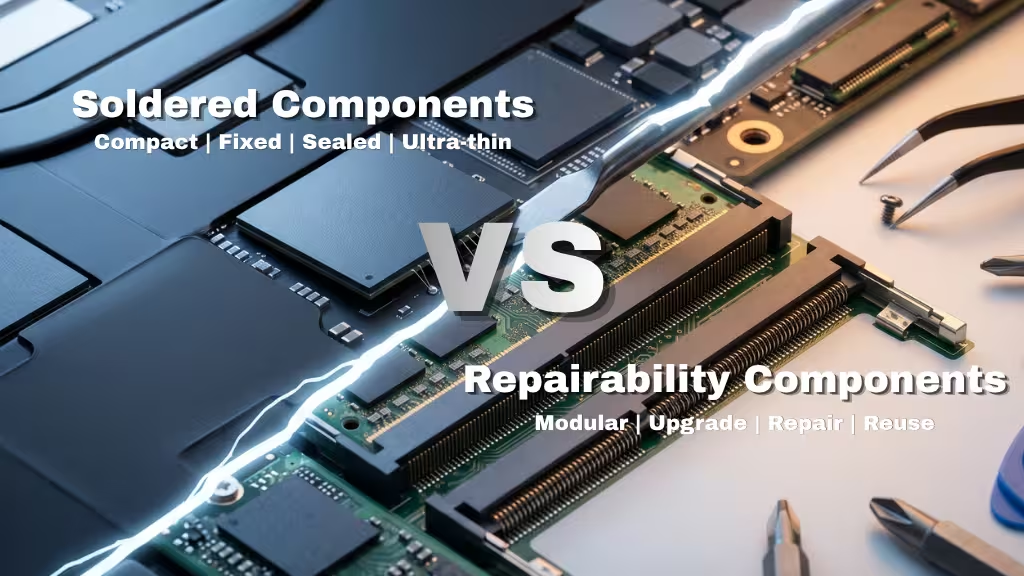
Soldered RAM, soldered storage, and soldered Wi-Fi cards might help manufacturers make devices thinner, lighter, and even slightly more affordable. But where does that leave consumers who want the right to repair and upgrade their systems and devices? It’s a bubbling confrontation that looks set to come to a head in the year to come.
In the 2010s where Apple began its drive to make its laptops ultra thin and ultra light, it started to solder certain components. Removing the interfaces for DIY installation, repair, and upgrade, helped shave precious ounces from the overall weight, millimeters from its thickness, and in some cases improve performance due to tighter latency over direct soldered connections without the need for an interface.
But the problem with soldered memory, soldered storage, or any other soldered components, is that you can’t easily replace them. A laptop with soldered components cannot be easily repaired, or upgraded, and that has implications for the longevity of the laptop.
It also raises environmental concerns. If laptops can’t be upgraded or repaired when something goes wrong, they’ll face earlier redundancy and end up in landfill that bit sooner. That might mean consumers buy new devices more often, but as modular laptop brands like Framework garner more interest and right to repair laws gather more support, soldered components may face serious pushback in the near future.
What are the benefits of soldered components?
The most immediate benefit of soldered components is that they take up less space. Instead of RAM being mounted on its own PCB connected via a RAM slot that needs locking pins for manual memory installation and removal, it can be soldered directly to the motherboard. That cuts down on weight and physical thickness, making it easier to design thin and light laptops.For devices that use removable memory modules instead, upgrading RAM is often a simple way to improve system performance. Check out our guide on how to install RAM on a PC for a step-by-step overview of the upgrade process.
This simplification of the manufacturing process can also reduce costs for the device maker, which can be passed on to the consumer at retail. There are some suggestions that soldering memory can help improve performance a little, by being more efficient than data having to transit the RAM interface, but it’s unlikely to be noticed by most users.
It does, however, improve shock resistance and system reliability. If a laptop or other device with soldered memory is dropped, it’s much less likely the RAM will be damaged if the chips are soldered to the PCB, than if they’re locked into slots that are designed to allow them to be removed. If users aren’t removing and adding new memory modules, too, there’s less chance of user error during upgrade or repair, potentially reducing support needs for a particular product.
Why soldered components are a concern
With a growing right to repair movement, soldered components can be considered a huge step in the wrong direction. They make it impossible to repair those components without resorting to electrical engineering, and that is guaranteed to invalidate your warranty. If that laptop becomes damaged, it’s less likely to be repaired if the only solution is dealing with the original manufacturer. That can lead to devices ending up in landfill sooner, creating larger e-waste issues.
It also makes it much harder to upgrade a laptop or other device, meaning it will be outdated sooner, and less likely to be useful over the longer term. That once again accelerates redundancy and could lead to greater e-waste buildup over time. It also removes a fun hobby for DIY enthusiasts who like to customize their systems for improved performance and personality.
Right place, right time
In more affordable devices, in those that are specifically designed for super lightweight operation, soldering components makes some sense. If a device is unlikely to be upgraded any way, and it can help boost performance where budgets are tight, soldering may have its place.
In other devices and situations, though, soldering components feels like a bad design choice. It restricts user choice and agency, creates greater environmental issues, and interferes with what many see as a fundamental right to repair their own technology.
As the environmental impact of industries come under increasing spotlights, it may be that soldered components fall out of fashion. Indeed, it is often incompatible with growing legislation around right to repair. But with its ability to reduce costs for manufacturers and encourage more frequent upgrades in customers, it’s something manufacturers will likely fight for in the years to come.
Choose Hardware That Keeps Your Upgrade Options Open
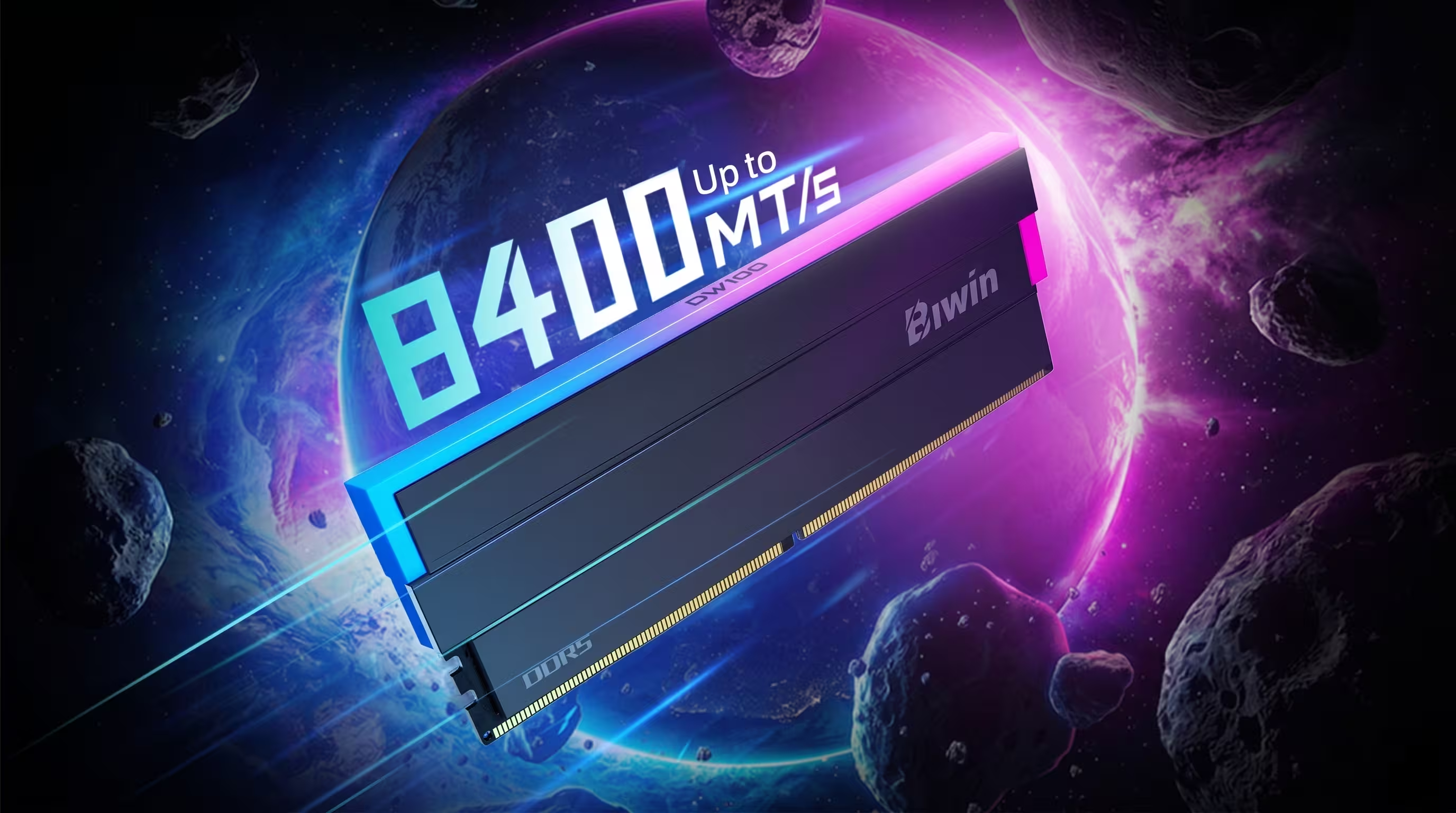
As debates around repairability and upgradeability continue, one way consumers can vote with their wallets is by choosing hardware that isn’t permanently fixed to the motherboard. If you’re building a desktop PC or upgrading a system with replaceable memory, Biwin Black Opal DW100 DDR5 RGB Memory offers a straightforward way to increase memory capacity and performance without replacing the entire device. More importantly, it preserves the flexibility to upgrade again in the future, helping extend the useful life of your PC instead of forcing a full system replacement as your needs evolve.