DDR5 memory prices are higher in 2026 than they’ve been in years, and there are a number of factors behind it, including AI infrastructure builds, fabrication line alterations, and increasing software demands. As for whether it’s worth it, that depends on you and your budget, but there are older alternatives still worth considering.
If you’re building a cutting-edge PC in 2026, you want to use DDR5 memory. It’s available up to speeds in excess of 8,000 MT/s, with tight timings, attractive RGB lighting, and stays cool thanks to efficient power management and capable heatspreaders. But there’s no denying that DDR5 is much more expensive than it used to be. In some cases, hundreds of percent higher than the original launch price from just a year or two ago.
What’s behind this? A major part of it is the huge global infrastructure buildout of new AI hardware. Data centers filled with powerful graphics cards, CPUs, memory, and storage, needs gargantuan quantities of the DRAM that companies like Biwin use in building DDR5 memory sticks. With massive corporations like Nvidia, OpenAI, and Anthropic buying up enormous quantities of memory for their data center builds, there’s less of it for consumer hardware.
Compounding those shortages, the major memory companies have retooled some of their fabrication lines to produce data center-friendly memory standards like HBM and LPDDR5X rather than traditional DDR5 memory, further squeezing supply. Indeed, even major memory companies like Micron have shuttered their consumer brand, Crucial, despite strong sales and decades of goodwill.
Less impactful, but arguably more obvious for consumers, modern hardware needs more memory, because the software demands are rising all the time. Modern PC games often require 16GB of system memory at a minimum, with some now demanding 32GB. Graphics cards need more than 8GB of VRAM to enable many modern visual features, especially when playing at higher resolutions like 1440p and 4K.
Not sure whether your DDR5 memory is delivering the performance you paid for? Learn How to Check DDR5 RAM Speeds with Simple Steps and verify your memory’s actual operating speed.
That makes the lack of available, affordable DDR5 bite even harder, because gamers and PC enthusiasts are feeling the need for more memory, while feeling the pinch on their wallets. That leaves people looking for alternatives, raising the question of whether DDR5 is still worth it?
Is DDR5 Worth it in 2026?
The short answer is yes. If you want the best performance and are willing to pay the premium for it, there is no substitute for DDR5. It’s the only solution for the latest and fastest processors, so if you’re building or buying a top-tier PC for work or play in 2026, DDR5 is the way to go.
To make a build more affordable, you could also buy a single stick and upgrade with a second later. You could look out for slower, less-premium kits, like the Biwin RU200 DDR5 desktop memory. It’s fast and power efficient, but without the premium of highest-performance and fancy heatspreaders.
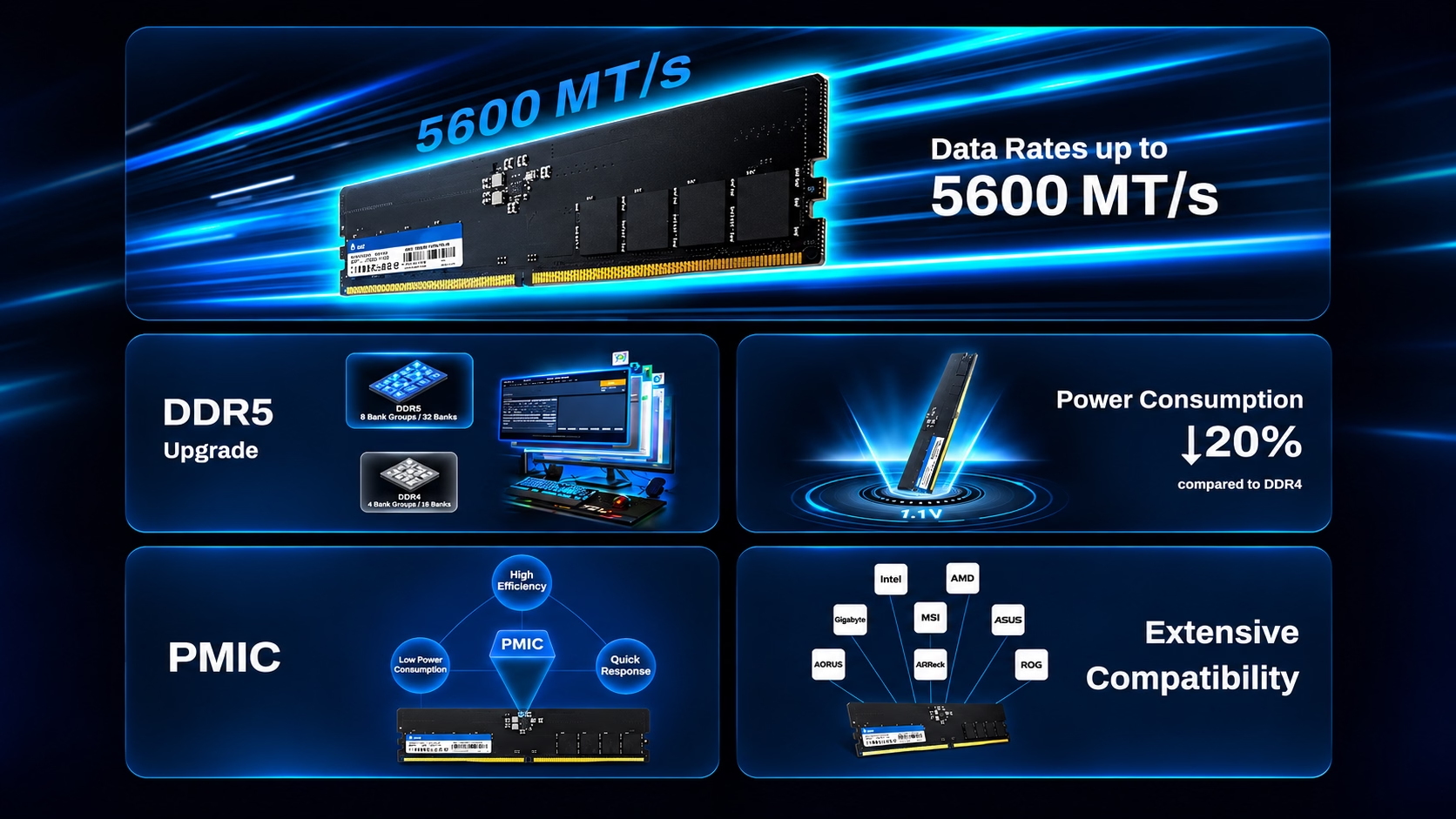
However, that’s not to say that DDR5 is the only option. DDR4 is more affordable and there are plenty of fast AMD Zen 3 and Intel 13th, and 14th generation CPUs that are still worth considering. Indeed, both AMD and Intel have re-released icons of that era, such as the Ryzen 5800X3D and Intel Core i5 14600K and 14900K (as Core 200 rebrands), making it easier to get hold of the right hardware to make a DDR4 build fast and effective.
While you will leave some performance and features on the table with older systems that support DDR4 memory, it remains an option for more affordable PC building. It might just open up the budget you need for other important components.