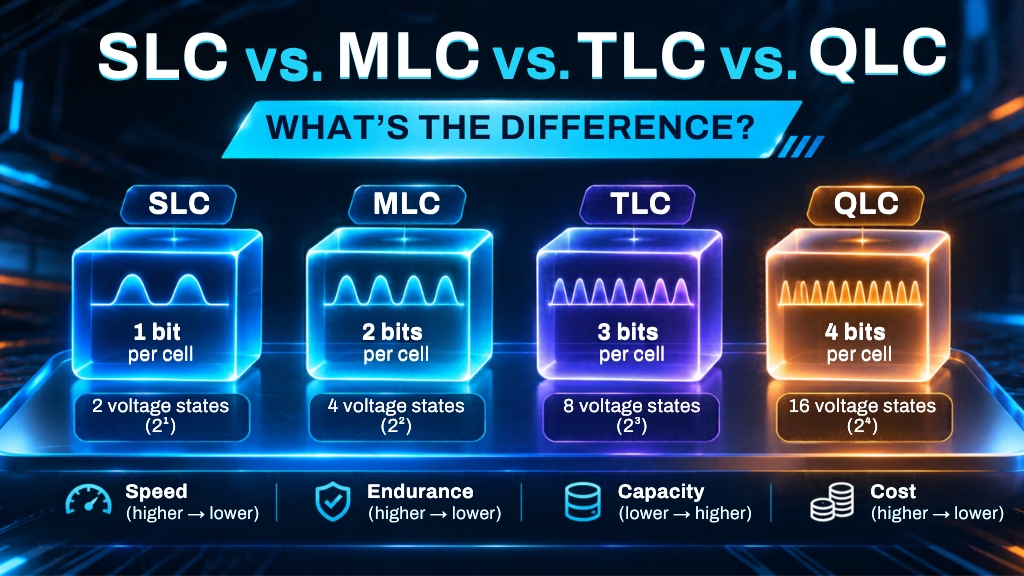
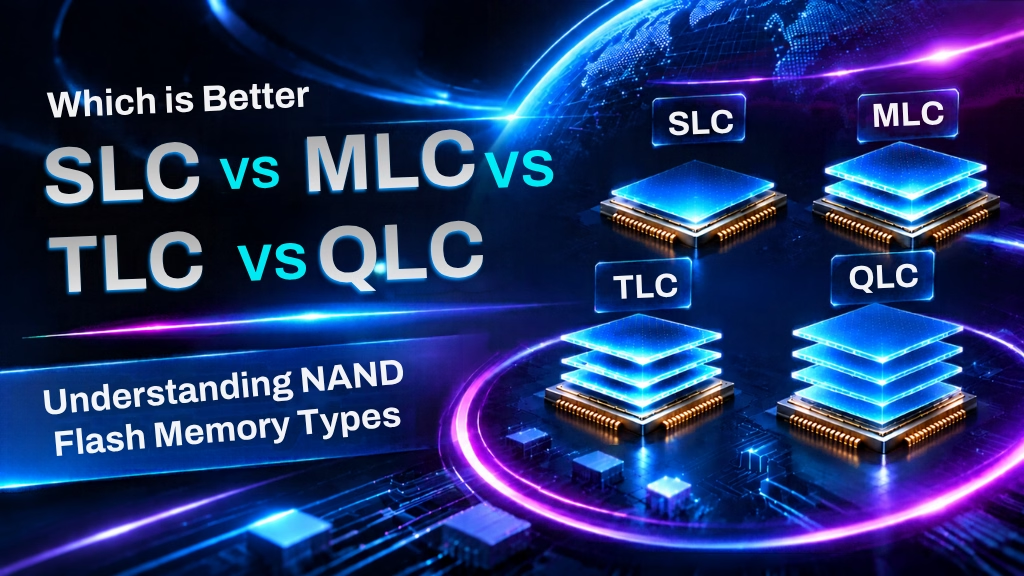
Different NAND Flash memory cell types have different advantages and disadvantages, making them ideally suited to different scenarios and device-types. Where QLC offers the best capacity per dollar and helps build larger capacity, more-affordable SSDs and memory cards, SLC is the opposite. Used in highly specialized scenarios where lower capacity and increased cost are less of a problem.
Depending on the task or device at hand, different NAND Flash memory types are better suited than others. Where SLC is the oldest type of memory cell and the most expensive to produce, it still has important uses in industrial settings where the trade off in capacity and cost is worth it for improved durability and performance. In comparison, TLC and QLC are much-more suited to consumer devices where cost is more of a factor, and they don’t need the extreme endurance and performance of more costlier memory cell types.
So, which is better? It depends on what you want to do with it and what kind of device it’ll end up in. Each memory cell type has its uses and best use cases.
SLC – The fastest and most expensive
SLC NAND Flash may be the oldest NAND Flash memory cell type, but that doesn’t mean it’s redundant. Indeed, in 2026 demand for this type of memory cell has increased dramatically as its extreme reliability, durability, and performance are ideally suited to AI edge computing devices, data centers, and automotive electronics. Learn more about Why SSD Technology Plays a Key Role in AI Acceleration.
This is only driving up the cost further, with predictions that its price per chip will rise dramatically before the end of 2026, further cementing it as a specialized technology primarily for use in industrial and enterprise machines and devices.
MLC – The odd-one out
MLC is in an interesting position in 2026, as though it can offer performance and endurance far greater than that of TLC and QLC, and is notably cheaper than SLC, its being squeezed from both ends. For developers who have previously built devices with mid-density MLC NAND, they’ve begun migrating to 4Gb and 8Gb SLC NAND instead thanks to its greater reliability and longer endurance.
Boosting performance of TLC and QLC drives with DRAM and SLC caches, too, has made SSDs built around those NAND Flash types far faster – at least for short burst workloads. That makes their performance comparable to MLC drives at a fraction of the cost.
That’s why we see reports of Samsung phasing out its MLC production entirely, and other memory makers like SK Hynix and Micron limiting their production to only cover existing customers. Overall, MLC NAND Flash capacity is expected to decline 42% in 2026, according to Trendforce.
TLC – The premium SSD driver
If you’re looking to buy a high-end SSD, there’s a good chance it’ll use TLC NAND Flash. Sitting in the sweet spot between the affordability of QLC and the performance and durability of MLC, TLC offers excellent reliability, a long operating life, and excellent performance. With a DRAM or SLC cache, too, it can operate much like an MLC drive for shorter workloads, making it excellent for every day use in consumer desktops and laptops – especially gaming machines.
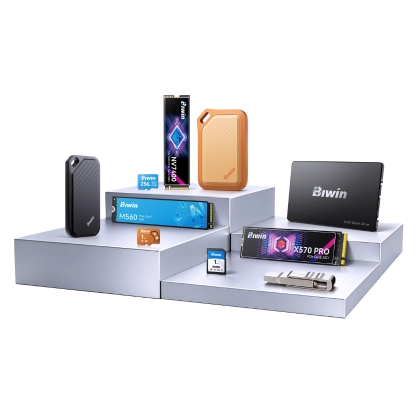
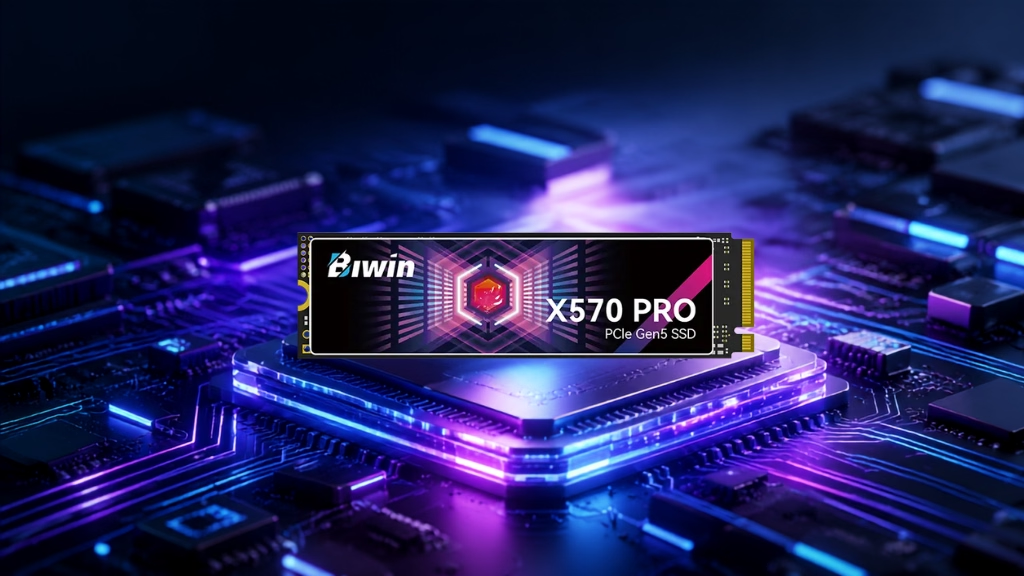
For a good example of where TLC makes sense, consider the Biwin Black Opal X570 PRO SSD. Its combination of TLC NAND Flash and DRAM cache helps maintain strong performance over longer workloads, making it well suited to demanding gaming and creative work where sustained performance and endurance matter more than getting the lowest cost per gigabyte. But if capacity and cost are more important, that’s where QLC has the advantage.
QLC – When capacity and cost matters most
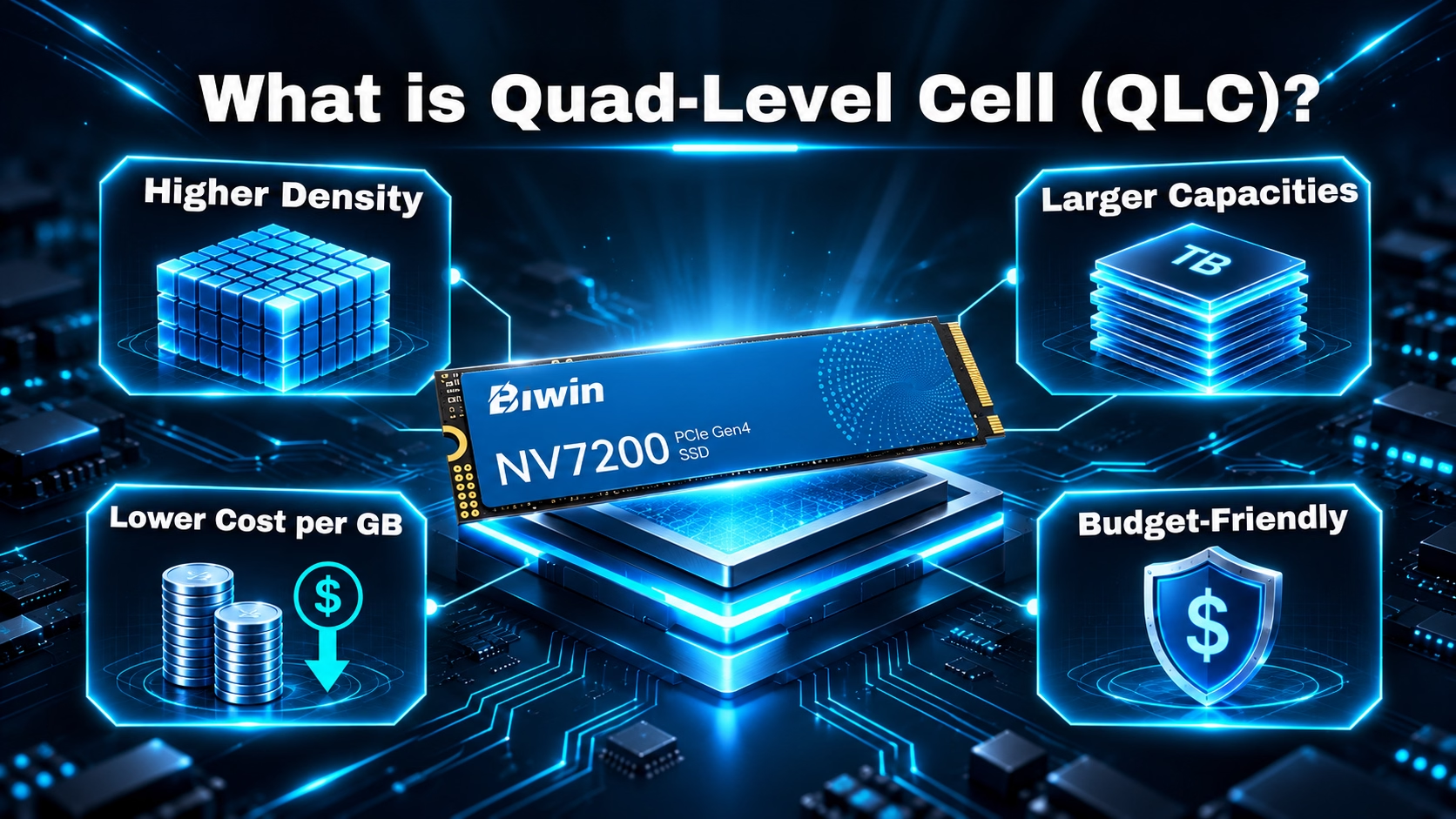
If you want lots of storage space or are working within a tight budget, QLC is the best NAND Flash memory type to aim for. It’s much cheaper than TLC and other forms of NAND Flash and thanks to its ability to operate within 16 different voltage states, it’s the densest form of memory cell. That makes it much more affordable to build big SSDs and with an SLC cache, performance can be surprisingly strong for shorter workloads.
For this reason, QLC is particularly attractive for higher-capacity drives, where the cost of the NAND Flash becomes an even bigger factor. If you’re buying a 4 TB or 8 TB SSD, QLC is likely to be one of the most common options you’ll come across. Although 2026 pricing means these drives aren’t always cheaper, QLC still makes the most sense when getting more capacity for your money matters more than maximum performance or endurance.